

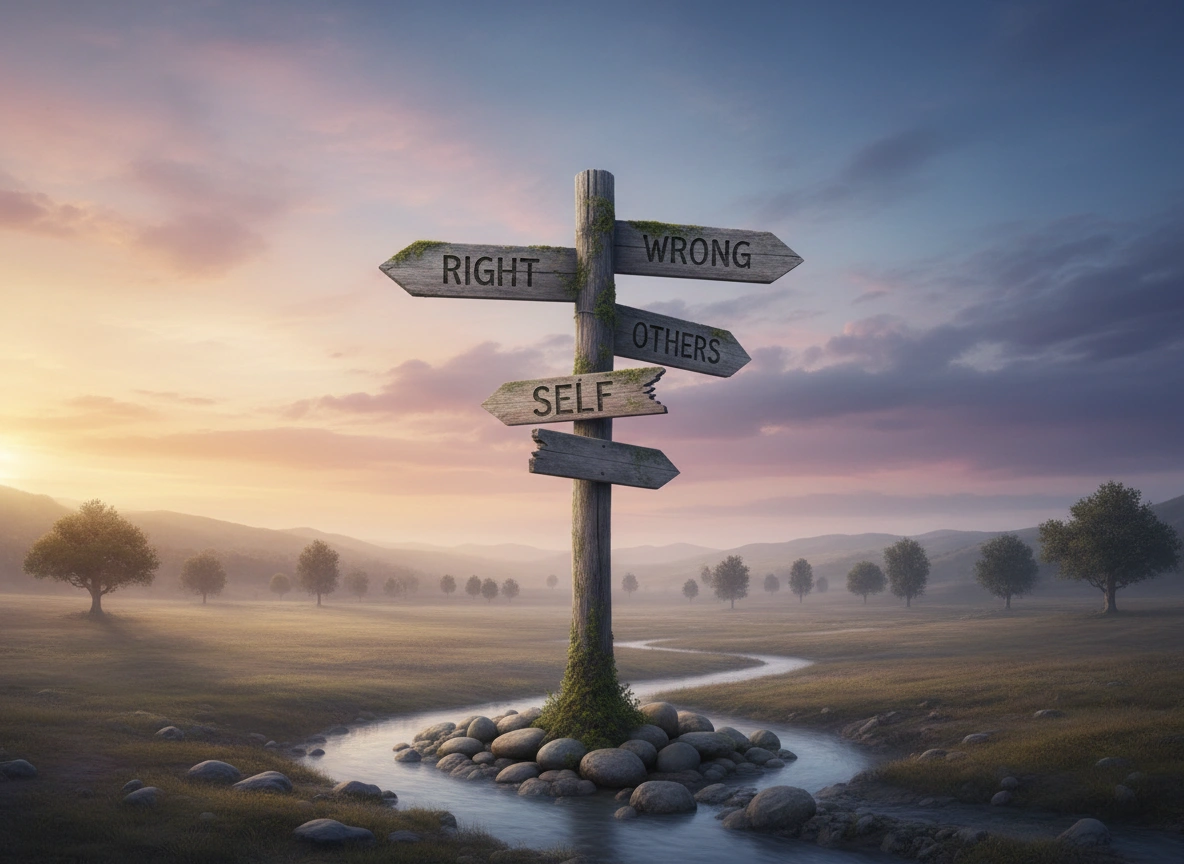
Life rarely presents us with clear-cut choices between right and wrong. More often, we find ourselves at a crossroads, facing situations where competing moral principles clash. These are moral dilemmas, complex predicaments where any available option requires transgressing a deeply held ethical belief. They are not simple problems with easy solutions; they are the crucibles that test our character, shape our values, and define our humanity. Understanding moral dilemmas is crucial, not just for personal integrity but also for fostering a more thoughtful and harmonious society.
A moral dilemma arises when an individual must choose between two or more actions, each of which has a compelling moral reason supporting it, but which are mutually exclusive. Choosing one path means neglecting the moral imperative of the other. This internal conflict is what makes these situations so challenging. They force us to weigh duties, rights, and consequences, often with no perfect outcome. From the boardroom to the hospital room, and from the classroom to our closest relationships, these dilemmas are an unavoidable part of the human experience.
Real-Life Examples Across Different Domains
Moral dilemmas are not abstract philosophical puzzles; they are woven into the fabric of our daily lives and professional responsibilities. Examining them in context helps reveal their complexity.
In Healthcare:
Consider the case of a doctor treating a terminally ill patient who is in immense, untreatable pain. The patient, of sound mind, begs for assistance in ending their life. The doctor is caught between two core ethical principles: the duty to alleviate suffering and the duty to preserve life. Complying with the patient’s request honors their autonomy and ends their pain, but it violates the Hippocratic Oath to “do no harm.” Refusing the request upholds the sanctity of life but prolongs the patient’s agony against their will. There is no choice that aligns with all the doctor’s moral and professional obligations.
In Business:
Imagine a manager at a manufacturing company who discovers that a cost-cutting measure, approved by upper management, has resulted in a minor safety defect in a popular product. The defect poses a very small, but not zero, risk of injury to consumers. Recalling the product would be incredibly expensive, likely leading to layoffs and significant financial losses for the company and its shareholders. The manager faces a conflict between their duty to protect public safety and their fiduciary responsibility to the company and its employees. Speaking up could cost them their job and harm the livelihoods of their colleagues. Staying silent, however, means accepting a potential risk to unsuspecting customers.
In Education:
A high school teacher is grading final exams when they notice a star student, who needs a high grade to secure a university scholarship, has cheated on a small portion of the test. This student comes from a low-income background, and the scholarship is their only path to higher education. The teacher’s duty is to uphold academic integrity and ensure fairness for all students by reporting the cheating. However, they also feel a sense of compassion and a desire to see a deserving student succeed against the odds. Enforcing the rules could shatter the student’s future, while ignoring the infraction undermines the very principles the teacher is meant to instill.
In Personal Relationships:
Suppose you learn a difficult secret: your best friend’s spouse is having an affair. Your loyalty to your friend suggests you should tell them the truth. You believe they have a right to know and that honesty is fundamental to true friendship. On the other hand, revealing this information will undoubtedly cause your friend immense pain and could destroy their family. You also risk being blamed for the fallout, potentially ending the friendship. The dilemma pits the value of honesty and loyalty against the desire to protect a loved one from profound emotional harm.
The Psychological and Ethical Challenge
Navigating these dilemmas takes a significant psychological toll. The internal conflict can cause stress, anxiety, and guilt, regardless of the choice made. This is because each option involves a moral compromise. The decision-maker must live with the consequences of the path not taken and the ethical principle they were forced to abandon.
Ethically, these situations challenge us to move beyond simple rule-following. Most of us operate with a set of moral guidelines—don’t lie, don’t steal, don’t harm others. Moral dilemmas occur when these rules come into conflict. To resolve them, we must engage in a deeper level of ethical reasoning, considering the nuances of the situation, the potential consequences of our actions, and the very foundation of our values.
Frameworks for Navigating Moral Dilemmas
While there is no magic formula to solve every moral dilemma, structured frameworks can guide our thinking, helping us make more conscious and defensible decisions.
1. The Utilitarian Approach:
This framework, rooted in the work of philosophers like Jeremy Bentham and John Stuart Mill, focuses on consequences. The most ethical choice is the one that will produce the greatest good for the greatest number of people. When facing a dilemma, a utilitarian approach would involve listing all possible actions and estimating the overall happiness or suffering each would cause. The manager in the business example might use this to weigh the financial harm of a recall against the potential physical harm to consumers. The challenge lies in accurately predicting outcomes and quantifying happiness or harm.
2. The Deontological Approach:
Championed by Immanuel Kant, deontology emphasizes duties and rules. It argues that certain actions are inherently right or wrong, regardless of their consequences. A deontologist would focus on their moral duties and the universal principles at stake. For the teacher, the duty to uphold academic integrity might be seen as an absolute rule that cannot be bent, even for a compassionate reason. This approach provides moral clarity but can sometimes feel rigid and insensitive to the specific context of a situation.
3. The Virtue Ethics Approach:
This perspective, with roots in Aristotle, shifts the focus from actions or consequences to the character of the moral agent. It asks: “What would a virtuous person do in this situation?” Virtues like honesty, compassion, courage, and justice become the guiding principles. The friend with the difficult secret might ask what a truly loyal and compassionate friend would do. This encourages a more holistic view, but it can be subjective, as people may disagree on what constitutes a virtuous character.
4. A Practical Step-by-Step Model:
Combining elements from these classical theories, a practical decision-making model can provide a clear path forward.
- Gather the Facts: Ensure you have a clear and complete understanding of the situation. Who is involved? What are the stakes?
- Identify the Ethical Issues: Clearly state the competing values or principles at play. What are the core moral conflicts?
- Consider All Stakeholders: Think about how each potential action would affect every person or group involved. Try to see the situation from their perspective.
- Evaluate Alternative Actions: Brainstorm multiple courses of action. For each one, consider it through the lens of utilitarianism (consequences), deontology (duties), and virtue ethics (character).
- Make a Decision and Test It: Choose the option that seems the most ethically sound. Before acting, ask yourself: “How would I feel if my decision was made public? Could I defend it to a respected mentor?”
- Act and Reflect: Once you have acted, reflect on the outcome. What did you learn from the experience? How can this inform your future decisions?
The Importance of Moral Reflection
Engaging with moral dilemmas, even hypothetically, is a powerful exercise in personal and societal growth. For individuals, wrestling with these challenges builds empathy, strengthens critical thinking skills, and clarifies personal values. It moves us from a state of passively accepting rules to actively constructing our own moral compass. This process is fundamental to developing maturity and integrity.
On a societal level, open and thoughtful discussion about moral dilemmas is essential for progress. It allows us to collectively navigate complex issues in fields like bioethics, artificial intelligence, and environmental policy. By creating a culture where these conversations are encouraged, we foster a more just, compassionate, and ethically aware community. Ultimately, how we confront these moments of conflict defines not only who we are as individuals but also the kind of world we choose to build together.please click here for more info.
You may also read:How to Manage TikTok Followers Without Blocking: A Step-by-Step Guide











Leave a Reply