

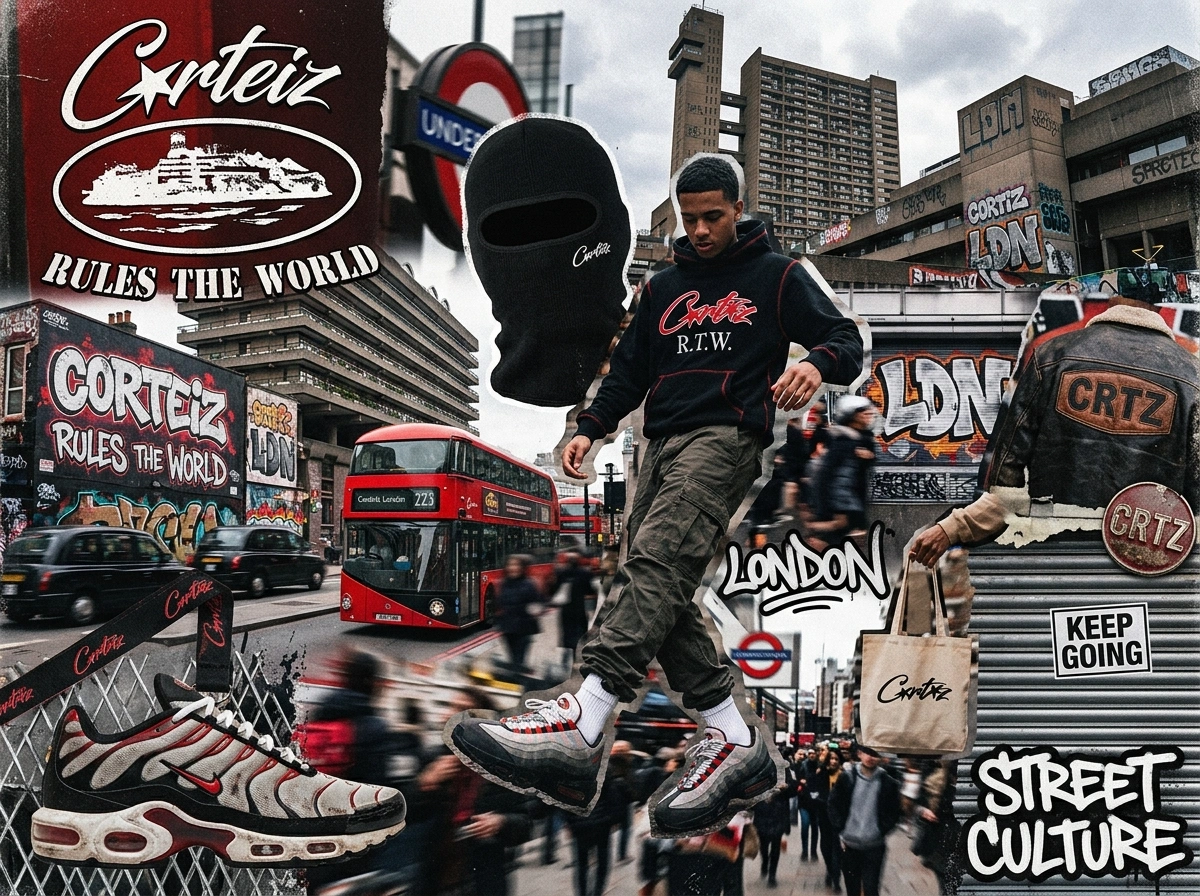
Few brands manage to capture a city’s energy the way Corteiz captures London. It didn’t arrive with celebrity endorsements or splashy billboards. Instead, it grew from the pavement up, fueled by word of mouth, locked Instagram accounts, and a refusal to play by fashion’s traditional rules. In this article, you’ll learn how British street culture shaped Corteiz, why the brand connects so deeply with urban youth, and what its grassroots model reveals about modern streetwear. Understanding these roots matters because Corteiz isn’t just selling clothes—it’s reflecting an entire generation’s identity.
What Defines British Street Culture
British street culture is a blend of music, sport, immigration, and working-class grit. It pulls from grime and drill scenes, football terrace fashion, council estate creativity, and decades of subcultural rebellion. Unlike polished American streetwear, the British version often feels rawer and more local.
You can trace its DNA through several threads:
- Music movements like grime, jungle, and UK garage that gave young people a voice.
- Football culture, where tracksuits, trainers, and brands became badges of belonging.
- Multicultural neighborhoods in cities like London, where styles from Caribbean, African, and South Asian communities mixed freely.
- DIY attitude, born from limited resources and a need to stand out without big budgets.
This environment rewards authenticity over polish. Brands that try too hard get rejected quickly. That’s the world Corteiz stepped into—and mastered.
Key takeaway: British street culture values realness, community, and local identity far more than mainstream approval.
How Corteiz Emerged From London’s Streets
Founded by Clint419 around 2017, Corteiz started as a small, almost invisible operation. There was no flashy launch. The brand’s Instagram was set to private, meaning you had to request access just to see what was happening. That single decision said everything about its philosophy: this wasn’t for everyone.
The now-iconic Alcatraz logo—a prison tower—carried a clear message. Corteiz positioned itself as an escape from the “matrix” of mainstream fashion and corporate control. The slogan “Rules The World” (RTW) became a rallying cry for fans who felt locked out of traditional luxury and hype culture.
Rather than chasing department stores, Corteiz built scarcity into its model. Drops sold out in minutes. Pieces became status symbols. And because access felt earned rather than given, demand only grew stronger.
The Community-Driven Ethos
What separates Corteiz from countless other streetwear labels is its relationship with its audience. The brand treats followers like members of a movement rather than customers in a funnel.
Exclusivity as a feeling, not just a price
Corteiz makes people feel like insiders. The private account, the cryptic drops, and the limited stock all create a sense of belonging. When you wear the brand, you signal that you’re part of something deliberately hard to access. That emotional payoff drives loyalty far more than logos alone.
Loyalty built on shared values
Clint has been vocal about staying independent and resisting corporate buyouts. For young people who distrust big institutions, that stance resonates. Corteiz feels like it’s on their side, speaking their language and reflecting their reality.
Bottom line: Corteiz sells identity and inclusion within an exclusive circle—not just garments.
Grassroots Marketing That Broke the Rules
Corteiz became a case study in unconventional promotion. Instead of paid ads, it used bold, attention-grabbing stunts that turned customers into participants.
Some of its most talked-about moves include:
- The “Bolo Exchange,” where people traded designer jackets from brands like North Face and Moncler for a Corteiz puffer at a fraction of the cost. It was provocative, generous, and impossible to ignore.
- Geo-located drops that sent fans racing across London to secret locations, turning shopping into an adventure.
- 99p product releases, where extremely cheap prices created chaos and buzz, rewarding the most dedicated followers.
- Guerrilla billboards and stickers placed around the city, building mystery long before many people knew the name.
These tactics worked because they matched the culture. They were street-level, slightly rebellious, and built for sharing. Each stunt generated organic conversation that no advertising budget could buy.
Key takeaway: Corteiz proved that creativity and community engagement can outperform traditional marketing spend.
Identity, Belonging, and Urban Youth
To understand why Corteiz resonates so deeply, you have to look at what young people want from fashion today. It’s rarely just about fabric or fit. It’s about expressing who they are and where they come from.
Corteiz taps into this in three powerful ways:
- Representation: It reflects multicultural, working-class London honestly, without watering it down for mass appeal.
- Pride of place: The brand celebrates the city’s streets, postcodes, and energy, giving local identity a global stage.
- Self-expression: Wearing Corteiz becomes a statement of taste, awareness, and connection to a wider movement.
For many young fans, the brand feels like a mirror. It says their world matters and deserves to be seen. That emotional connection turns casual buyers into long-term advocates.
Cultural Impact Beyond Clothing
Corteiz’s influence now stretches far past streetwear circles. Major artists, footballers, and cultural figures wear it, yet the brand never lost its grassroots feel. That balance is rare and difficult to maintain.
Its rise has also shifted how the industry thinks. Established labels now study Corteiz’s playbook—scarcity, storytelling, and authentic community building. The brand showed that a UK independent could compete with global giants on its own terms, without compromising its message.
Perhaps most importantly, Corteiz expanded the spotlight on British street culture itself. It helped move the conversation away from American dominance and toward London as a serious creative force in fashion.
Bottom line: Corteiz didn’t just join streetwear—it reshaped expectations for what a homegrown brand can achieve.
What Brands Can Learn From Corteiz
If you study Corteiz as a model, a few clear lessons stand out. Use this short framework to understand its success:
- Lead with values. A strong belief system attracts loyal followers.
- Build genuine scarcity. Limited access increases desire when it feels authentic.
- Engage, don’t broadcast. Invite people into experiences rather than talking at them.
- Stay rooted. Honoring your origins builds trust that money can’t buy.
- Protect independence. Autonomy can become part of your brand’s appeal.
These principles work because they prioritize people over short-term profit. That’s a lesson any brand can apply, regardless of industry.
Conclusion
Corteiz grew directly from the soil of British street culture, drawing on music, multiculturalism, and working-class creativity to build something genuinely original. Its community-first ethos, daring grassroots marketing, and deep sense of identity turned a private Instagram account into a global movement. The brand resonates with urban youth because it reflects their world honestly and makes them feel part of something exclusive yet meaningful. Above all, Corteiz proved that authenticity and bold ideas can outperform big budgets and traditional rules.
Your next step is simple: study how Corteiz blends culture and commerce, then ask how your own brand or creative work could connect with people on that same human level.