

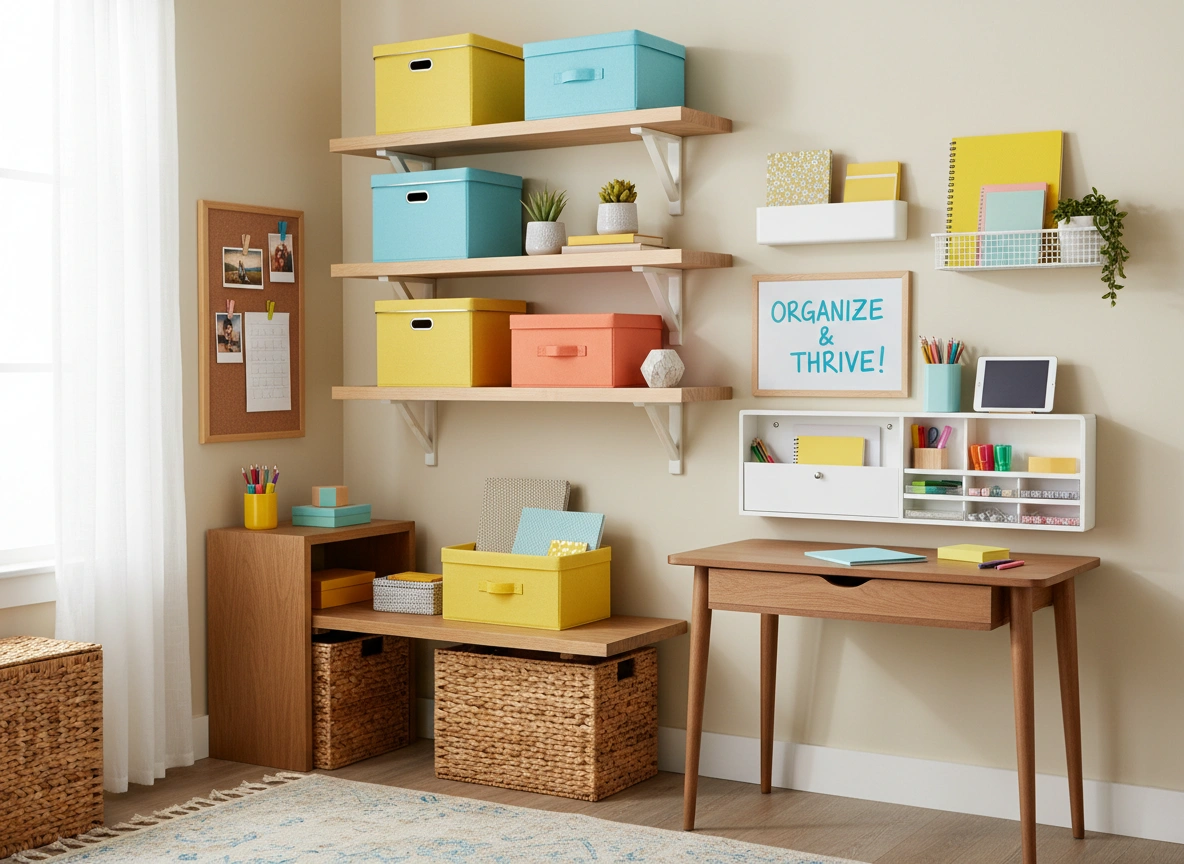
Living in a small apartment or home often feels like a constant battle against clutter. You buy one new book, and suddenly three others have nowhere to go. You bring home groceries, and your kitchen counters disappear. But small-space living doesn’t have to mean cramped living. In fact, limitations often breed the most creative solutions.
You don’t need a professional organizer or an unlimited budget at a high-end container store to transform your home. With a bit of ingenuity and some strategic decluttering, you can turn even the tiniest studio into a functional, breathable sanctuary. This guide will walk you through actionable, budget-friendly strategies to reclaim your square footage.
The Foundation: Decluttering Before You Organize
Before you buy a single bin or basket, you must address the volume of stuff you own. Organizing clutter is just moving a mess from one spot to another. To truly maximize a small space, you have to be ruthless about what stays.
The “One-Touch” Rule
This simple habit changes everything. When you bring an item into your home—mail, groceries, a jacket—deal with it immediately. Do not put it down on a “to-do” pile. Hang the jacket up. Recycle the junk mail instantly. This prevents the slow creep of clutter that makes small spaces feel claustrophobic.
The Seasonal Rotation Strategy
If you have a small closet, it shouldn’t hold your entire year’s wardrobe. Use under-bed storage or high-shelf bins to store off-season clothes.
- Winter: Store swimsuits, shorts, and light linens.
- Summer: Pack away heavy coats, thick sweaters, and flannel sheets.
Vacuum-seal bags are a budget-friendly miracle here. They compress bulky items down to a fraction of their size, allowing you to slide them under a sofa or stack them on a top shelf.
The 12-12-12 Challenge
Feeling overwhelmed? Try this quick game. Find 12 items to throw away, 12 items to donate, and 12 items to return to their proper home. It’s a fast, low-pressure way to make a visible dent in your clutter without committing to a whole weekend of cleaning.
Smart Vertical Storage: Look Up, Not Out
When floor space is premium, your walls become your best asset. Most people ignore the space above eye level, but in a small home, that is prime real estate.
Over-the-Door Solutions
Doors are often wasted space. A simple over-the-door shoe organizer is one of the most versatile and cheap tools you can buy.
- In the pantry: Store snacks, spice jars, or cleaning supplies.
- In the bathroom: Hold hair tools, toiletries, and extra toilet paper.
- In the bedroom: Organize scarves, belts, and small accessories.
You can find these for under $15, and they instantly add twenty or more “pockets” of storage without taking up an inch of floor space.
Floating Shelves
Bulky bookcases eat up floor space. Floating shelves, however, provide storage without the heavy visual footprint. Install them above your desk, over the toilet, or even above door frames. Use them for books, plants, or decor that would otherwise clutter surfaces. You can often find inexpensive shelf kits at hardware stores, or make your own from reclaimed wood for a rustic, low-cost look.
Pegboards: The Ultimate Customizable Wall
Originally for garages, pegboards are now a stylish staple for small interiors. A pegboard can transform a blank kitchen wall into a pot rack and utensil holder. In a home office, it keeps headphones, cables, and stationery off the desk. The best part? They are incredibly cheap and completely modular. As your needs change, you just move the hooks.
Multi-Functional Furniture: Double Duty Design
In a small space, every piece of furniture must earn its keep. If an item only does one thing, it might be taking up too much room.
The Ottoman with a Secret
Replace your coffee table or side chair with a storage ottoman. These are fantastic for hiding blankets, board games, or electronics. When guests come over, you have extra seating. When you want to relax, it’s a footrest. And all the while, it’s a storage bin.
Drop-Leaf Tables
A dining table that seats six is great for Thanksgiving, but it’s a hindrance on a regular Tuesday in a studio apartment. Look for drop-leaf or gate-leg tables. These can fold down to the size of a console table (roughly 10-12 inches deep) when not in use. This flexibility allows you to reclaim your floor space for yoga, working, or just walking around without bumping your hip.
Bed Risers
If your bed frame sits low to the ground, you are losing massive storage potential. A set of heavy-duty bed risers costs less than $20 and can lift your bed an extra 4 to 6 inches. This clearance allows you to slide large plastic bins or rolling drawers underneath. It’s the equivalent of adding a small dresser to your bedroom without taking up wall space.
Budget-Friendly DIY Organization Hacks
You don’t need acrylic organizers or matching wicker baskets to be organized. Many household items can be repurposed to create order.
Cereal Box Drawer Dividers
Messy junk drawers are a universal problem. Instead of buying expensive drawer inserts, save your cereal and cracker boxes.
- Cut the bottom half off the box.
- Wrap it in contact paper or even leftover wrapping paper for a nice look.
- Arrange them in your drawer like a game of Tetris.
These make perfect compartments for pens, batteries, makeup, or office supplies.
Tension Rods
These are the unsung heroes of budget organization.
- Under the sink: Install a tension rod to hang spray bottles by their triggers. This frees up the bottom of the cabinet for baskets or sponges.
- In the cabinet: Place tension rods vertically to create slots for baking sheets, cutting boards, and pot lids. No more loud crashing sounds every time you try to grab a cookie sheet!
- Shoe rack: In a narrow nook or closet, place two tension rods parallel to each other (one slightly lower and further back). Rest shoes on top of them.
Binder Clips in the Fridge
Wire fridge shelves can be tricky. Use binder clips to hang bags of frozen veggies or shredded cheese from the bars of the shelf above. This utilizes the “dead air” space between shelves and prevents bags from getting lost in the back of the freezer.
Magnetic Strips
A magnetic knife strip isn’t just for knives.
- Bathroom: Mount one inside a cabinet door to hold bobby pins, tweezers, and nail clippers.
- Toy Room: Use it to hold metal toy cars or small action figures.
- Craft Room: Keep scissors and metal rulers within arm’s reach.
The Psychology of Small Space Living
Organizing a small space is as much about mindset as it is about storage bins. Visual clutter creates mental clutter.
Color Coordination
This sounds purely aesthetic, but it serves a function. In a small space, visual noise makes the room feel smaller. Try to coordinate your storage. If you use open bins, try to keep them all the same color (white or neutral tones usually work best to keep things airy). This creates a unified look that tricks the eye into seeing “wall” rather than “stuff.”
Clear vs. Opaque Storage
Know when to show and when to hide.
- Clear bins: essential for things you need to find quickly, like pantry items or craft supplies.
- Opaque bins: necessary for visually messy items, like cords, old paperwork, or mismatched socks. Hiding the chaos inside a solid basket makes the room feel calmer.
The “One In, One Out” Habit
To maintain your hard work, adopt this mantra. If you buy a new pair of shoes, an old pair must be donated or tossed. If you buy a new mug, an old one goes. This is crucial for small spaces because your storage capacity is finite. You cannot infinitely expand; you can only curate.
Conclusion
Creating an organized home in a small space doesn’t require a renovation or a lottery win. It requires a shift in perspective. It’s about looking at a door and seeing storage potential, looking at a cereal box and seeing a drawer divider, and looking at your belongings and deciding what truly adds value to your life.
Start small. Tackle one drawer, one shelf, or one corner at a time. Implement these low-cost hacks, and you will find that your small space feels significantly larger, lighter, and more livable. Your home should be your recharge station, not a source of stress. With these creative solutions, you can reclaim your space and your peace of mind.Check out this site to find useful information.
You may also read:Positive Parenting Tips for Raising Confident and Happy Kids














Leave a Reply