 Skip to content

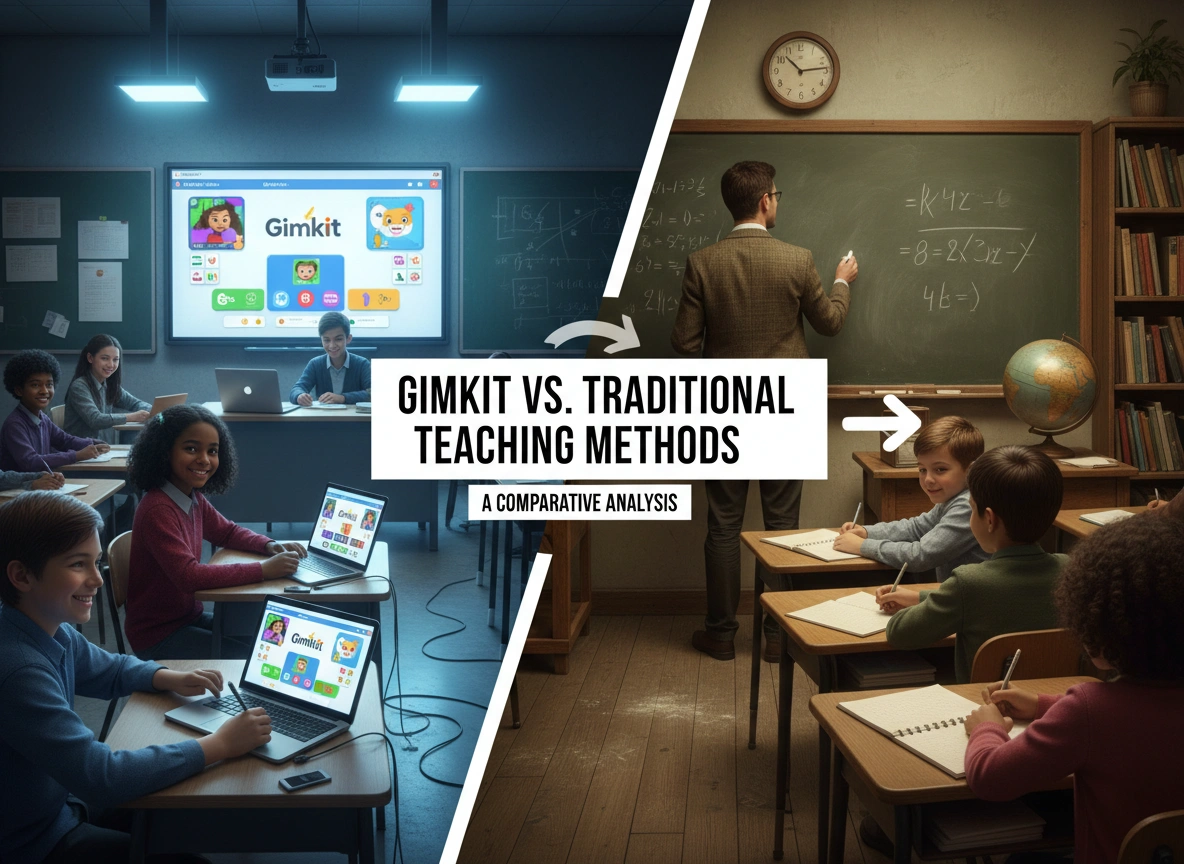
The landscape of education is in a constant state of flux, with technological advancements continually introducing new tools and methodologies. This evolution sparks an ongoing debate: How do modern, digital-first approaches stack up against the time-tested strategies of traditional teaching? One platform at the center of this conversation is Gimkit, a gamified learning tool that has gained significant traction in classrooms worldwide. This article offers a professional, in-depth comparison of Gimkit and traditional teaching methods, exploring their respective strengths and weaknesses in engaging students, fostering learning, and accommodating diverse educational needs.
Understanding the Contenders: Gimkit and Traditional Methods
Before diving into a direct comparison, it is essential to define our terms.
Traditional Teaching Methods encompass a range of instructor-led practices that have formed the bedrock of formal education for centuries. These methods often include lectures, direct instruction, textbook-based learning, rote memorization, and paper-and-pencil assessments. The classroom structure is typically hierarchical, with the teacher acting as the primary source of information and students as passive recipients. The focus is on knowledge transmission and standardized evaluation through tests and quizzes.
Gimkit, on the other hand, represents a modern, technology-driven approach. It is a live learning game show platform where students compete by answering questions on their own devices. Correct answers earn them in-game currency, which they can “invest” in power-ups and upgrades to gain an advantage. The teacher controls the game’s pace and can customize question sets to align with curriculum goals. Gimkit’s design is intentionally fast-paced and competitive, borrowing elements from popular video games to create an engaging academic experience.
A Head-to-Head Comparison
To evaluate their effectiveness, we can compare these two approaches across several key educational domains.
1. Student Engagement and Motivation
Traditional Methods: A common criticism of traditional teaching is its potential to foster passivity. In a lecture-heavy environment, student engagement can wane, particularly for those who do not learn best by listening. While a charismatic and skilled teacher can certainly make traditional lessons captivating, the methods themselves do not inherently build in mechanisms for sustained, active participation from every student. Motivation often stems from external factors, such as grades or the fear of failure, rather than intrinsic interest in the material.
Gimkit: This is where Gimkit shines. Its core design is built around engagement. The gamified elements—points, upgrades, competition, and fast-paced rounds—tap into students’ natural desire for play and achievement. The platform creates an environment of active participation where every student is involved simultaneously. This gamified competition can transform a routine review session into an exciting event, boosting motivation and encouraging students to pay closer attention to the content. The immediate feedback loop (seeing a right or wrong answer instantly) keeps learners invested in the process.
2. Learning Outcomes and Knowledge Retention
Traditional Methods: Traditional methods are highly effective for foundational knowledge acquisition. Direct instruction is an efficient way to introduce complex concepts, theories, and historical facts. Repetitive practice, like completing worksheets or reciting multiplication tables, helps cement information through rote memorization, which is crucial for certain subjects. The structured, deliberate pace allows for deep dives into topics. However, the risk is that students may learn information for a test and forget it shortly after—a phenomenon known as “cram and forget.” Retention can be an issue if the knowledge is not applied or connected to real-world contexts.
Gimkit: Gimkit excels at reinforcement and formative assessment. It is an outstanding tool for reviewing previously taught material. The repetitive nature of answering questions in a game format helps solidify concepts in a low-stakes environment. Students are often so engaged in the game that they don’t realize they are participating in rigorous practice and recall. The platform provides teachers with instant data on which questions students are struggling with, allowing for immediate intervention. However, Gimkit is not designed for initial instruction of complex topics. It is a supplementary tool, not a replacement for the initial lesson. Using it without prior teaching would be ineffective, as students would lack the foundational knowledge needed to answer the questions.
3. Adaptation to Different Learning Styles
Traditional Methods: The traditional model heavily favors auditory and reading/writing learners. Students who thrive by listening to lectures and taking notes are well-served by this approach. However, it can be less effective for kinesthetic (learning by doing) and visual learners who may struggle to stay focused without more dynamic or hands-on activities. While teachers can incorporate various activities, the default lecture-and-worksheet format is not inherently flexible.
Gimkit: Gimkit offers a more multimodal experience. It is highly visual and interactive, appealing directly to kinesthetic learners who engage by doing. The competitive aspect can also cater to students who are motivated by goals and challenges. However, it may not be ideal for all learners. The fast-paced, high-energy environment could be overwhelming for students who prefer quiet, reflective learning or those who experience anxiety related to speed and competition. While Gimkit offers different game modes, some of which are more collaborative, the primary format is timed and competitive.
4. Classroom Management and Teacher’s Role
Traditional Methods: In a traditional setting, the teacher is the central authority and manager of the classroom. They direct the flow of information, manage behavior, and orchestrate all activities. This provides a high degree of control and structure, which can be essential for maintaining an orderly learning environment. The teacher’s role is that of a “sage on the stage.”
Gimkit: When using Gimkit, the teacher’s role shifts from a lecturer to a facilitator or “guide on the side.” The teacher sets up the game, monitors progress, and uses the resulting data to inform future instruction. While the game is running, students are largely self-directed, managing their own responses and strategies. This can foster independence and decision-making skills. However, it also presents a new classroom management challenge: ensuring that the high energy of the game remains productive and does not devolve into chaos. It requires setting clear expectations for digital citizenship and sportsmanship.
Finding the Right Balance: Integration Over Replacement
The debate should not be framed as an “either/or” choice between Gimkit and traditional teaching. The most effective educational practice lies in a blended approach that leverages the strengths of both. A teacher might use direct instruction—a traditional method—to introduce the key figures and events of the French Revolution. They could then use a Gimkit game as a fun, engaging way for students to review those facts, names, and dates. The data from the game could highlight common misconceptions, which the teacher can then address in a follow-up discussion or a targeted mini-lesson.
In this integrated model:
- Traditional methods provide the foundational knowledge and structured learning necessary for deep understanding.
- Gimkit serves as a powerful tool for reinforcement, engagement, and formative assessment, making practice and review enjoyable and effective.
Conclusion
Neither Gimkit nor traditional teaching methods can be declared universally “better.” They serve different purposes and possess unique strengths. Traditional methods offer structure, depth, and efficiency in delivering new information. Gimkit provides unparalleled engagement, immediate feedback, and a dynamic way to practice and review material.
The forward-thinking educator does not discard the old in favor of the new, nor do they resist innovation out of allegiance to tradition. Instead, they curate a diverse toolkit of instructional strategies. The goal is to create a rich, varied, and responsive learning environment. By skillfully blending the reliability of traditional instruction with the dynamic energy of tools like Gimkit, educators can cater to a wider range of students, improve knowledge retention, and ultimately foster a more effective and motivating classroom for the 21st century.
Please visit website for more info.











Leave a Reply