 Skip to content

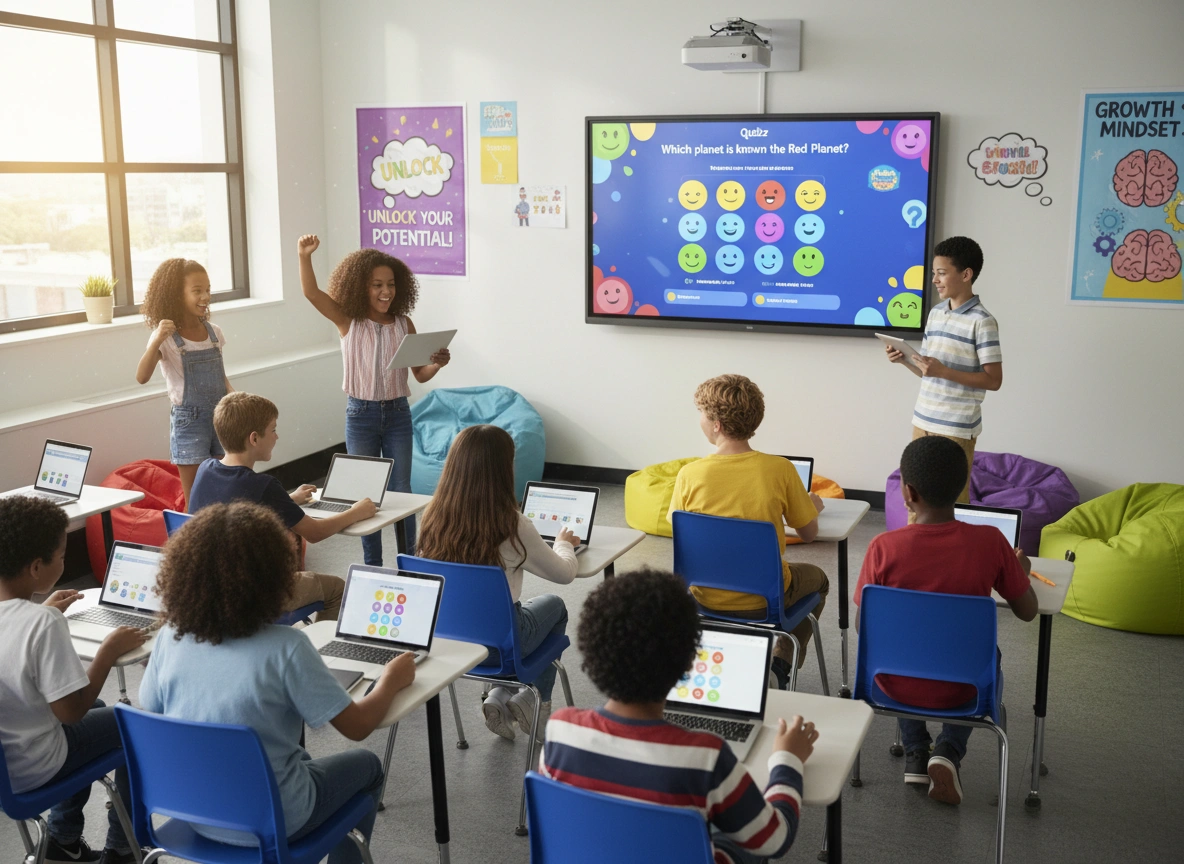
Confidence is the silent engine of academic success. When a student believes they can learn, they participate more, take risks, and bounce back from failure. Conversely, a lack of confidence often manifests as disengagement or behavioral issues. For educators and administrators seeking tools to bridge this gap, Quizizz has emerged as a powerful ally. It is more than just a platform for testing; it is a dynamic environment where low-stakes practice fosters high-stakes confidence.
This article explores how the specific features of Quizizz—from gamification to immediate feedback—transform the learning experience and empower students to take ownership of their academic journey.
The Psychology of Gamification and Student Engagement
Traditional testing environments can trigger anxiety. The silence of the exam hall and the pressure of a single grade often paralyze students who struggle with confidence. Quizizz dismantles this anxiety through strategic gamification. By integrating game-like elements into assessment, the platform shifts the focus from “testing” to “playing,” which significantly lowers the affective filter—the emotional barrier that prevents learning.
Replacing Anxiety with Adrenaline
When students engage with a Quizizz session, they enter a competitive yet safe environment. The inclusion of leaderboards, power-ups, and memes creates a sense of excitement that replaces test anxiety.
This shift is crucial for reluctant learners. A student who might freeze during a paper-and-pencil quiz is often the same student eagerly tapping answers on a screen to earn a “streak saver” or a “double jeopardy” power-up. This adrenaline is productive; it keeps the brain alert and engaged without the paralyzing fear of failure. When learning feels like a game, the fear of making a mistake diminishes. Students start to view errors not as final judgments on their intelligence, but as obstacles to be overcome in the next round.
Inclusive Participation
In a traditional classroom discussion, the same three or four confident students often dominate. Quiet or unsure students fade into the background. Quizizz democratizes participation. Every student answers every question on their own device. This ensures that 100% of the class is engaged, not just the vocal minority.
For a student lacking confidence, seeing their name climb the leaderboard—even if just for a moment—provides tangible proof of their capability. It validates their knowledge in a public yet safe way. Even if they don’t win, the act of participating fully alongside their peers builds a sense of belonging and competence.
The Power of Real-Time Feedback
One of the most significant barriers to building confidence is delayed feedback. If a student takes a quiz on Tuesday but doesn’t see the results until Friday, the learning moment has passed. They may have spent days reinforcing incorrect information or worrying about their performance. Quizizz solves this with instant, actionable feedback.
Correcting Misconceptions Immediately
As soon as a student selects an answer on Quizizz, they know if they were right or wrong. If they answer incorrectly, the correct answer is displayed immediately (depending on the teacher’s settings). This instant correction is vital. It turns a mistake into a learning opportunity instantly.
Consider a math student struggling with order of operations. On a traditional worksheet, they might complete 20 problems incorrectly, cementing a bad habit. On Quizizz, after the first incorrect answer, they receive feedback. They can adjust their thinking for the next question. This rapid iteration allows students to self-correct and improve within the span of a single activity. Seeing their own improvement in real-time is a massive confidence booster. It proves to them that they can learn and adapt.
Private Data for Personal Growth
While the leaderboard adds a fun competitive element, the detailed data Quizizz provides is personal. Students receive a summary of their performance at the end of a session, showing exactly which questions they missed and their accuracy percentage.
This private data empowers students to take ownership of their learning. Instead of waiting for a teacher to tell them what they need to study, they can see it for themselves. For a student with low confidence, this transparency is reassuring. It removes the mystery of grading. They can see exactly where they stand and what they need to do to improve, transforming vague anxiety into a concrete plan of action.
Customization: Meeting Students Where They Are
A “one-size-fits-all” approach is often the enemy of confidence. If a quiz is too hard, students give up. If it is too easy, they disengage. Quizizz offers robust customization options that allow teachers to tailor assessments to the specific needs of their students, ensuring the challenge level is just right—a zone often referred to as the “Zone of Proximal Development.”
Redemption Questions and Retakes
A unique feature of Quizizz that directly targets confidence is the “Redemption Question.” This feature allows students to re-attempt a question they previously got wrong. This simple mechanic sends a powerful message: failure is not final. You get a second chance.
This philosophy of redemption is essential for building a growth mindset. It teaches students that persistence pays off. Furthermore, teachers can assign quizzes as homework or independent practice with unlimited attempts. A student who scores 60% on their first try can retake the quiz as many times as needed to reach 90% or 100%. This mastery-based approach ensures that students don’t just move on with gaps in their knowledge; they keep working until they feel confident in the material.
Read-Aloud and Accessibility Features
Confidence often crumbles when students face barriers that have nothing to do with the subject matter. For example, a student with strong science knowledge but poor reading skills might fail a science test simply because they couldn’t decipher the questions.
Quizizz includes built-in accessibility tools like the “Read Aloud” feature. This ensures that students are tested on their content knowledge, not their reading fluency. When these barriers are removed, students can demonstrate what they actually know. The relief and pride a student feels when they can finally show their true understanding is transformative.
Practical Strategies for Educators
To maximize the confidence-building potential of Quizizz, educators should move beyond using it solely for summative assessment. Here are strategic ways to implement the tool:
1. The “Low-Stakes” Bell Ringer
Start class with a short, 5-question Quizizz based on the previous day’s lesson. Keep the mood light and focus on review. This primes the brain for learning and gives students an early “win” for the day. Even if they struggle, the immediate review sets them up for better understanding during the main lesson.
2. Student-Created Quizzes
Flip the script and ask students to create their own Quizizz questions for their peers. This requires higher-order thinking and mastery of the material. When a student sees their classmates answering a question they wrote, it provides a unique sense of authority and confidence in the subject matter.
3. The “Mastery Mode” Challenge
Assign a Quizizz set for homework but set a goal, such as “You must achieve 90% accuracy.” Allow unlimited attempts. This shifts the goal from “getting it done” to “getting it right.” Students learn that effort correlates with success, a fundamental building block of academic self-esteem.
4. Anonymous Mode for Sensitive Topics
For subjects where students might be embarrassed to answer incorrectly publicly, turn off the leaderboard or use anonymous nicknames. This allows students to test their knowledge without the social pressure, building their internal confidence before they are asked to perform publicly.
Conclusion
Confidence is not a fixed trait; it is a renewable resource that must be cultivated daily. For educators, the challenge lies in finding tools that rigorously assess student knowledge while simultaneously building up the student. Quizizz succeeds in this dual mission.
By leveraging gamification to lower anxiety, providing real-time feedback to correct misconceptions instantly, and offering customization that allows for mastery learning, Quizizz transforms assessment into a constructive dialogue. It teaches students that they are capable of growth, that mistakes are temporary, and that learning is a game they can win. When students believe that, the ceiling on what they can achieve disappears.
Please visit website for more info
















Leave a Reply