

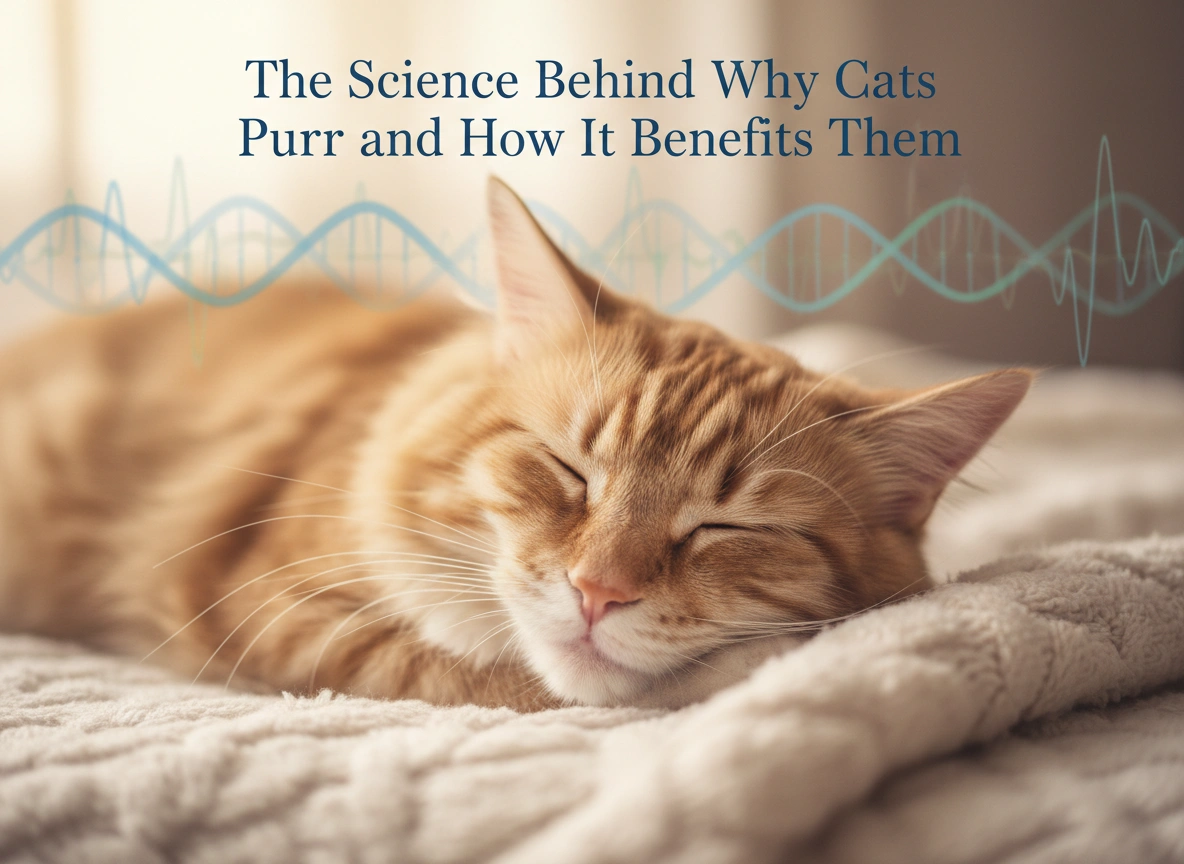
For centuries, the rhythmic rumble of a purring cat has been one of the most comforting sounds in the animal kingdom. It is a sound associated with contentment, a warm lap, and a sleepy afternoon. However, the common assumption that cats only purr when they are happy is a vast oversimplification. While joy is certainly a trigger, the science behind this unique vocalization reveals a much more complex picture—one that involves sophisticated biological mechanisms and serves crucial evolutionary functions ranging from communication to physical regeneration.
To truly understand our feline companions, we must look past the cozy stereotype and delve into the fascinating physiology and psychology of the purr.
The Biological Mechanism: How Do They Do It?
Before understanding why cats purr, it is essential to understand how they do it. For a long time, the mechanics of purring were a subject of debate among zoologists. Early theories suggested it was caused by blood surging through the inferior vena cava, but modern research has settled on a more muscular explanation.
The current scientific consensus is that purring originates in the brain. A repetitive neural oscillator sends messages to the laryngeal muscles, causing them to twitch at a rapid rate—specifically between 25 and 150 vibrations per second (Hz). This twitching causes the vocal cords to separate and close suddenly. As the cat breathes in and out, the air passes over these shifting muscles, creating the characteristic vibratory sound we recognize as a purr.
What makes this mechanism particularly impressive is that cats can purr continuously throughout the entire respiratory cycle. They purr while inhaling and exhaling, a feat that requires consistent neural firing and muscular control. This continuous sound production suggests that purring is not just an incidental noise but a deliberate, energy-consuming function that must offer significant survival advantages to be maintained through evolution.
Beyond Happiness: The Many Languages of the Purr
While a purring cat on your lap is almost certainly expressing contentment, felines also purr in situations that seem contradictory to happiness. Veterinarians frequently report cats purring when they are injured, frightened, or even dying. This paradox suggests that purring serves as a multi-functional tool for the cat, primarily centered on communication and self-regulation.
Communication with the Mother
The first time a cat purrs is when it is just a few days old. Kittens are born blind and deaf, navigating their world primarily through touch and smell. However, the vibrations of their mother’s purr act as a homing beacon. It guides the kittens to the source of warmth and milk. In return, kittens purr while nursing. This mutual vibration creates a feedback loop: the kitten signals “I am here, and I am feeding,” and the mother signals safety and presence. This early form of communication establishes a lifelong association between purring and care-giving.
Solicitation and Manipulation
As cats grow, they learn to adapt their vocalizations to get what they want. A study conducted by the University of Sussex identified a specific type of purr known as the “solicitation purr.” This purr is markedly different from the low, steady rumble of a sleeping cat. It includes a high-frequency cry embedded within the low-frequency purr—a sound that is strikingly similar in frequency to a human baby’s cry.
This high-frequency element triggers a sense of urgency in humans. While a standard purr is relaxing, the solicitation purr is difficult to ignore. Cats use this specialized purr primarily when they want food or attention, effectively hacking into the human nurturing instinct to ensure their needs are met.
The Self-Healing Hypothesis: Purring as Medicine
Perhaps the most groundbreaking area of research regarding feline vocalization is the “self-healing hypothesis.” This theory suggests that the purr is not just a signal to others, but a therapeutic mechanism for the cat itself.
The frequency of a cat’s purr—between 25 and 150 Hz—occupies a sweet spot in the realm of biomechanics. Research into bioacoustics and vibration therapy has shown that sound frequencies in this exact range can promote tissue regeneration, bone healing, and pain relief.
Bone Density and Muscle Repair
In the wild, cats spend a significant amount of time inactive. They are ambush predators that sleep or rest for up to 16 to 20 hours a day to conserve energy for hunting. In most mammals, such prolonged inactivity would lead to muscle atrophy and a decrease in bone density. However, cats remarkably maintain good muscle tone and bone health despite their sedentary lifestyle.
Scientists hypothesize that purring acts as a low-energy mechanism to stimulate muscles and bones without the cat needing to move. The constant vibration essentially provides a form of internal exercise. Frequencies between 20 and 50 Hz are particularly effective for bone growth and fracture healing, while frequencies slightly higher (around 100 Hz) are beneficial for soft tissue repair. This may explain why cats are reported to heal from broken bones faster than dogs and why they purr when injured—they are actively administering vibrational therapy to themselves.
Pain Management and Respiratory Health
The purr also seems to function as a natural analgesic. When a cat is in pain or under stress, the brain releases endorphins. The act of purring may stimulate this release, helping to soothe the animal. This is likely why a cat will purr during a stressful veterinary exam or after a traumatic event. It is a self-soothing behavior, similar to how a human might rock back and forth when in distress.
Furthermore, the vibrations from purring may help alleviate dyspnea, or difficulty breathing. The rumble in the chest cavity can help clear secretions and open airways, providing relief for cats suffering from upper respiratory infections.
Emotional Regulation and Stress Relief
Beyond the physical benefits, purring plays a massive role in a cat’s emotional stability. Just as deep breathing can calm a human, the rhythmic nature of purring helps regulate a cat’s nervous system.
When a cat encounters a new or threatening environment, it may purr to calm itself down—a behavior ethologists sometimes refer to as “displacement activity.” By focusing on the physical sensation of the purr, the cat can lower its heart rate and blood pressure. This creates a state of calmness that allows the animal to assess threats more clearly rather than reacting out of pure panic.
This emotional regulation also extends to social bonding. Mutual grooming (allogrooming) is often accompanied by purring. In multi-cat households, one cat may purr to signal submissiveness or non-aggression to a dominant cat, effectively diffusing potential conflicts. It acts as a white flag, vibrating the message: “I am not a threat; let’s stay calm.”
The Human Connection: A Mutual Benefit
While the focus of this exploration is on how purring benefits the cat, it is impossible to ignore the symbiotic relationship it creates with humans. The benefits of the purr transfer remarkably well across species lines.
Studies have shown that cat owners have a 40% lower risk of heart attack than non-cat owners. While correlation does not always equal causation, many experts believe the cat’s purr plays a role. The low frequency of the purr lowers human blood pressure and reduces cortisol levels (the stress hormone). It is a bi-directional healing mechanism: the cat purrs to heal itself and bond with its owner, and the owner relaxes, providing a safer and more stable environment for the cat.
Conclusion
The cat’s purr is a marvel of evolutionary engineering. It is far more than a simple expression of pleasure; it is a complex, multi-faceted survival tool.
Biologically, it is a sophisticated motor pattern involving rapid neural oscillation. Functionally, it serves as a homing beacon for kittens, a manipulative tool for food, a diplomatic signal to avoid conflict, and a self-soothing mechanism during high stress. Physically, it acts as an internal vibration therapy system, maintaining bone density during long naps and accelerating the healing of tissues after injury.
When we look at the science, we realize that cats have essentially evolved a built-in medical device that doubles as a communication system. So, the next time your cat curls up on your lap and begins that familiar rumble, know that they are not just telling you they are happy. They are engaging in a biological process that keeps their bones strong, their muscles toned, and their stress levels manageable—all while likely lowering your blood pressure in the process. It is a quiet, vibrating testament to the incredible efficiency of nature.Please visit website for more info.
You may also read:Unique Dog Names to Strengthen Your Bond with Your Furry Friend














Leave a Reply